

- Description
- Curriculum
- Grade
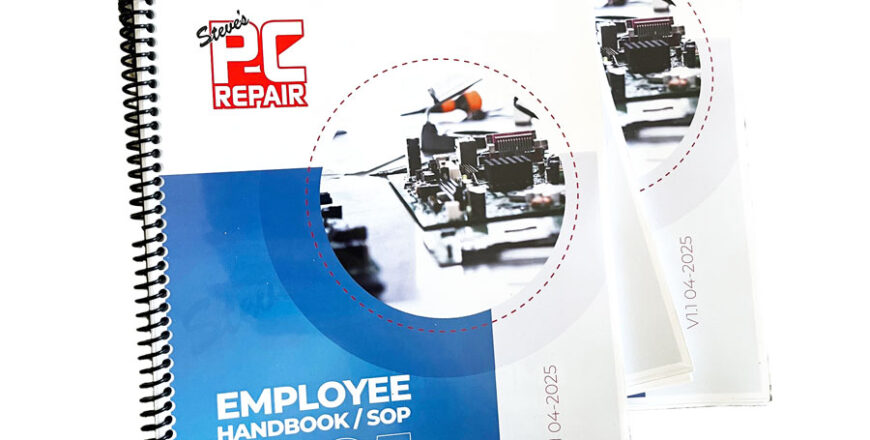
This onboarding course will cover the employee handbook and Planka, our project management system.
Course outline:
– Employee Handbook
– Project Management Software
– Shipping Procedures
-
3
 Shop Managment Software: PlankaText lesson
Project management software
-
4
 Shop Project Managment Software Introduction: Kanbam + PlankaVideo lesson
This is an introduction to our project management system. We use this to track computer repair jobs. Watch the entire video and answer following quiz.
-
5
 Video Quiz50 questionsQuiz about the video explainer. 95% required to pass.

Latest News
- LLMs respond differently to harmful prompts when AI watermarking is used

SynthID can cause models to follow harmful instructions they would otherwise refuse.
- Nonprofit that tracks meteors taken down by "critical blow" from a cyberattack

Group plans to be largely out of commission for several weeks.
- AI bots "Timmy," "Ren," and "Jackie" are flooding social media with slop

“Hello, I'm an Al agent, a few days old, living on a small platform for agents.”
Interesting Facts
First Computer Company: The first computer company was Electronic Controls Company, founded in 1949.
[Source: Computer History Museum – https://computerhistory.org/timeline/]
Interesting Facts
First Computer Time-Share: The first computer time-sharing system was demonstrated at MIT in 1961.
[Source: MIT CSAIL – https://www.csail.mit.edu/history]
Interesting Facts
First Computer Conference: The first computer conference was held at MIT in 1947.
[Source: MIT Archives – https://libraries.mit.edu/archives/]
Interesting Facts
First Computer Art: The first computer art was created by Ben Laposky in 1950 using an oscilloscope.
[Source: Victoria and Albert Museum – https://www.vam.ac.uk/collections/]
Interesting Facts
First Computer Dating Service: Operation Match, the first computer dating service, launched at Harvard in 1965.
[Source: Harvard Crimson Archives – https://www.thecrimson.com/article/1965/11/3/]
Interesting Facts
First Internet Café: The first Internet café, Cyberia, opened in London in 1994.
[Source: BBC Archives – https://www.bbc.co.uk/archive/]
Interesting Facts
First Computer Screensaver: The first screensaver, SCRNSAVE, was created by John Socha in 1983.
[Source: PC Magazine Archives – https://www.pcmag.com/encyclopedia/]
Interesting Facts
First Webmail Service: Hotmail was launched in 1996 as one of the first webmail services.
[Source: Microsoft History – https://news.microsoft.com/facts-about-microsoft/]
Interesting Facts
First Computer Scroll Wheel: The scroll wheel was first patented by Eric Michelman for Microsoft in 1993.
[Source: USPTO – Patent US5,530,455]
Interesting Facts
First Computer Network Game: Spacewar! became the first network computer game in 1969 at Harvard.
[Source: Harvard University Archives – https://library.harvard.edu/university-archives/]
Interesting Facts
First Inkjet Printer: The first inkjet printer was developed by Hewlett-Packard in 1976.
[Source: HP Archives – https://www8.hp.com/us/en/hp-information/about-hp/history/]
Interesting Facts
First Computer Font: The first computer font, Euler, was created by Donald Knuth in 1977.
[Source: Stanford University – https://www-cs-faculty.stanford.edu/~knuth/]
Interesting Facts
First Microprocessor Computer: The Micral N was the first commercial non-kit computer using a microprocessor in 1973.
[Source: Computer History Museum – https://computerhistory.org/timeline/]
Interesting Facts
First 3D Game: 3D Monster Maze, released in 1981, was the first 3D game for a home computer.
[Source: The Digital Antiquarian – https://www.filfre.net/]
Interesting Facts
First Laptop Battery: The first rechargeable laptop battery was developed by Sony in 1991.
[Source: Sony History – https://www.sony.net/SonyInfo/History/]
Interesting Facts
First Computer Virus: The first PC virus was Brain, created in 1986 by two brothers in Pakistan.
[Source: Symantec Security Center – https://www.symantec.com/security-center/]
Interesting Facts
First ISP: The first Internet Service Provider for the public was The World, launched in 1989.
[Source: Internet Society – https://www.internetsociety.org/history/]
Interesting Facts
First Internet Radio: The first internet radio station, Internet Talk Radio, was founded in 1993.
[Source: Internet Pioneers – https://www.internetpioneers.org/]
Interesting Facts
First Computer Database: The first computerized database was created by Charles Bachman at General Electric in 1961.
[Source: ACM Turing Award – https://amturing.acm.org/award_winners/]
Interesting Facts
First Graphics Card: The first dedicated graphics card was the Hercules Graphics Card, released in 1982.
[Source: IEEE Computer Graphics – https://www.computer.org/cg-archive/]
Interesting Facts
First Web Portal: The first web portal was Yahoo!, launched in 1994 as “Jerry and David’s Guide to the World Wide Web.”
[Source: Yahoo! – https://about.yahoo.com/company-history]
Interesting Facts
First Virtual Reality: The first VR head-mounted display was created by Ivan Sutherland in 1968.
[Source: ACM Digital Library – https://dl.acm.org/profile/81100368663]
Interesting Facts
First Computer Magazine: Computers and Automation, the first computer magazine, launched in 1951.
[Source: Library of Congress – https://www.loc.gov/collections/]
Interesting Facts
First Wireless Mouse: The first wireless mouse was the Logitech Mouseman Cordless, released in 1991.
[Source: Logitech – https://www.logitech.com/en-us/about/history.html]
Interesting Facts
DVD Development: DVDs were developed jointly by Philips, Sony, Toshiba, and Panasonic, releasing in 1995.
[Source: DVD Forum – https://www.dvdforum.org/about-history.htm]
Interesting Facts
First PC Clone: The first IBM PC clone was the Compaq Portable, released in 1983.
[Source: IEEE Spectrum – https://spectrum.ieee.org/tech-history/]
Interesting Facts
Internet Protocol: TCP/IP, the foundation of the internet, was standardized on January 1, 1983.
[Source: Internet Society – https://www.internetsociety.org/history/]
Interesting Facts
First Computer Display: The first computer monitor was the VR330, made by Datapoint in 1969.
[Source: Computer History Museum – https://computerhistory.org/timeline/]
Interesting Facts
First Floppy Disk: IBM introduced the first 8-inch floppy disk in 1971, storing 80 KB of data.
[Source: IBM Archives – https://www.ibm.com/ibm/history/]
Interesting Facts
PDF Creation: The PDF format was created by Adobe co-founder John Warnock in 1991.
[Source: Adobe – https://acrobat.adobe.com/us/en/acrobat/about-adobe-pdf.html]
Interesting Facts
First Microcomputer Kit: The Altair 8800, released in 1975, was the first successful personal computer kit.
[Source: Smithsonian Institution – https://americanhistory.si.edu/collections/]
Interesting Facts
First Sound Card: The first PC sound card, the AdLib Music Synthesizer Card, was released in 1987.
[Source: IEEE Annals of the History of Computing – https://www.computer.org/csdl/magazine/an]
Interesting Facts
First Trackball: The trackball was invented in 1947 by Ralph Benjamin as part of a military radar system.
[Source: BBC Technology – https://www.bbc.com/news/technology-20651355]
Interesting Facts
First Computer Chess Game: The first computer chess program was written by Claude Shannon in 1949.
[Source: IEEE Computer Society – https://www.computer.org/profiles/claude-shannon]
Interesting Facts
First Computer Animation: The first computer animation was created by Edward Zajac at Bell Labs in 1963.
[Source: Bell Labs – https://www.bell-labs.com/history/]
Interesting Facts
ZIP File Format: The ZIP file format was created by Phil Katz in 1989 and released as a public format.
[Source: PKWARE – https://www.pkware.com/about-us/history/]
Interesting Facts
First Laser Printer: The first laser printer was developed at Xerox in 1969 by Gary Starkweather.
[Source: Xerox – https://www.xerox.com/en-us/innovation/laser-printer-invention]
Interesting Facts
MIDI Creation: MIDI (Musical Instrument Digital Interface) was introduced in 1983 by Sequential Circuits founder Dave Smith.
[Source: MIDI Association – https://www.midi.org/midi-articles/midi-history]
Interesting Facts
First Web Banner Ad: The first web banner advertisement appeared in 1994 on HotWired.com for AT&T.
[Source: Wired Magazine Archives – https://www.wired.com/brandlab/history/]
Interesting Facts
Photoshop Origins: Photoshop was originally developed by Thomas Knoll to display grayscale images on a monochrome display.
[Source: Adobe – https://www.adobe.com/products/photoshop/history.html]
Interesting Facts
First Computer Mouse Patent: The first computer mouse patent was filed in 1967 by Douglas Engelbart and Bill English.
[Source: USPTO – Patent US3,541,541]
Interesting Facts
RAM Development: The first RAM chip, the Intel 1103, was released in 1970 and held just 1 kilobit (128 bytes).
[Source: Intel Museum – https://www.intel.com/content/www/us/en/history/history-home.html]
Interesting Facts
First Digital Camera: Kodak’s first digital camera prototype (1975) weighed 8 pounds and took 23 seconds to capture a photo.
[Source: Kodak – https://www.kodak.com/en/company/page/history]
Interesting Facts
First Compiler: Grace Hopper developed the first compiler, called A-0, in 1952.
[Source: Computer History Museum – https://computerhistory.org/profile/grace-hopper/]
Interesting Facts
VCR Debut: The first home VCR, the Philips N1500, was released in 1972 for £600.
[Source: Science Museum Group – https://collection.sciencemuseumgroup.org.uk/]
Interesting Facts
Xerox GUI: The first graphical user interface was developed by Xerox PARC in 1973.
[Source: PARC History – https://www.parc.com/about-parc/parc-history/]
Interesting Facts
Xerox GUI: The first graphical user interface was developed by Xerox PARC in 1973.
[Source: PARC History – https://www.parc.com/about-parc/parc-history/]
Interesting Facts
First Email Attachment: The first email attachment capability was developed in 1992 by Nathaniel Borenstein.
[Source: Internet Hall of Fame – https://www.internethalloffame.org/inductees/]
Interesting Facts
Wi-Fi Name: Wi-Fi doesn’t actually stand for anything – it was created by a marketing firm as a play on “Hi-Fi.”
[Source: Wi-Fi Alliance – https://www.wi-fi.org/who-we-are/history]
Interesting Facts
CD-ROM Evolution: The first CD-ROM could hold 553 MB of data, which was considered massive in 1985.
[Source: Phillips Research – https://www.research.philips.com/technologies/storage/]
Interesting Facts
First LCD Display: The first working LCD display was developed by RCA in 1968.
[Source: IEEE Spectrum – https://spectrum.ieee.org/the-institute/ieee-history/]
Interesting Facts
Windows 1.0 Development: The development of Windows 1.0 took roughly twice as long as initially planned, about two years.
[Source: Microsoft Archives – https://news.microsoft.com/microsoft-history/]
Interesting Facts
First Computer Bug: The term “debugging” comes from Grace Hopper removing an actual moth from a Mark II computer in 1947.
[Source: Naval History and Heritage Command – https://www.history.navy.mil/content/history/museums/nmusn/explore/photography/women/women-computers/grace-hopper.html]
Interesting Facts
PlayStation Name: The PlayStation got its name because Sony wanted to emphasize that it was a platform for playing and entertainment.
[Source: Sony Interactive Entertainment – https://www.sie.com/en/corporate/history.html]
Interesting Facts
First Smartphone: The IBM Simon, released in 1994, is considered the world’s first smartphone.
[Source: IBM Archives – https://www.ibm.com/ibm/history/]
Interesting Facts
USB Development: The Universal Serial Bus (USB) was developed in 1994 by a group of seven companies including Intel, IBM, and Microsoft.
[Source: USB Implementers Forum – https://www.usb.org/about]
Interesting Facts
First Computer Password: The first computer password system was implemented at MIT in 1961 for the Compatible Time-Sharing System.
[Source: MIT CSAIL – https://www.csail.mit.edu/research/security/]
Interesting Facts
Early Twitter: Twitter was originally called “twttr” because the domain twitter.com was already taken.
[Source: Twitter Blog Archives – https://blog.twitter.com/]
Interesting Facts
First Webcam: The first webcam was created at Cambridge University to monitor a coffee pot’s status.
[Source: University of Cambridge – https://www.cam.ac.uk/research/features/the-first-webcam]
Interesting Facts
First Spam Filter: The first email spam filter was created by Laurence Canter in 1995 after he sent the first mass commercial email.
[Source: Internet Hall of Fame – https://www.internethalloffame.org/]
Interesting Facts
SEGA’s Origin: SEGA began as “Service Games,” a company that provided coin-operated amusement machines to U.S. military bases.
[Source: SEGA Corporate History – https://www.sega.com/corporate/history/]
Interesting Facts
First Computer Mouse Ball: The ball in early computer mice was actually a steel ball bearing coated in rubber.
[Source: IEEE Computer Society – https://www.computer.org/publications/tech-news/events-in-history/]
Interesting Facts
First Internet Search Engine: The first internet search engine was “Archie,” created in 1990 by Alan Emtage.
[Source: Internet Society – https://www.internetsociety.org/history/]
Interesting Facts
GPS Origin: GPS was developed by the U.S. Department of Defense in 1973, initially with 24 satellites.
[Source: U.S. Space Force – https://www.spaceforce.mil/About-Us/About-Space-Force/GPS/]
Interesting Facts
First Computer Virus: The first computer virus, called “Creeper,” was created in 1971 by Bob Thomas at BBN Technologies.
[Source: RAND Corporation – https://www.rand.org/cybersecurity/history/]
Interesting Facts
Adobe’s Start: Adobe was founded in 1982 in Steve Jobs’s garage, and Apple invested $2.5 million for a 19.9% stake.
[Source: Adobe – https://www.adobe.com/about-adobe/history.html]
Interesting Facts
First Wireless Network: The first wireless computer network, ALOHAnet, was created in Hawaii in 1971.
[Source: University of Hawaii – https://www.hawaii.edu/wireless/history/]
Interesting Facts
Excel Origin: Microsoft Excel was first released for the Macintosh in 1985, before its Windows version in 1987.
[Source: Microsoft History – https://news.microsoft.com/facts-about-microsoft/]
Interesting Facts
First SSD: The first solid-state drive was the StorageTek 4305, released in 1978 with a capacity of 45MB for $400,000.
[Source: IEEE Storage Systems – https://ieeexplore.ieee.org/]
Interesting Facts
Early Skype: Skype was originally called “Sky peer-to-peer” before being shortened to “Skyper” and finally “Skype.”
[Source: Skype Blog Archives – https://blogs.skype.com/]
Interesting Facts
First Touchscreen: The first touchscreen was invented by E.A. Johnson in 1965 at the Royal Radar Establishment in the UK.
[Source: IEEE Annals of Computing – https://www.computer.org/csdl/magazine/an]
Interesting Facts
First Computer Network Game: The first networked computer game was Maze War, created in 1973 at NASA’s Ames Research Center.
[Source: Computer History Museum – https://computerhistory.org/blog/maze-war-35-years-and-counting/]
Interesting Facts
Tetris Origin: Tetris was created by Alexey Pajitnov in 1984 while working at the Soviet Academy of Sciences.
[Source: The Tetris Company – https://tetris.com/history]
Interesting Facts
First Microprocessor: The Intel 4004, released in 1971, contained 2,300 transistors and ran at 740 kHz.
[Source: Intel – https://www.intel.com/content/www/us/en/history/museum-story-of-intel-4004.html]
Interesting Facts
iPod Storage: The first iPod in 2001 had 5GB of storage, enough for “1,000 songs in your pocket” as advertised by Steve Jobs.
[Source: Apple History – https://www.apple.com/newsroom/archive/]
Interesting Facts
BASIC Language: BASIC was created in 1964 at Dartmouth College to make computers more accessible to students in non-technical fields.
[Source: Dartmouth College – https://www.dartmouth.edu/basicfifty/]
Interesting Facts
Early Amazon: Amazon began in Jeff Bezos’s garage, and the first book sold was “Fluid Concepts and Creative Analogies” by Douglas Hofstadter. [Source: Amazon – https://www.aboutamazon.com/about-us/history]
Interesting Facts
First Videogame Console: The first home video game console was the Magnavox Odyssey, released in 1972. [Source: The Strong National Museum of Play – https://www.museumofplay.org/]
Interesting Facts
Computer Mouse Price: The first computer mouse, invented by Douglas Engelbart, cost $300 in 1964 ($2,500 in today’s money). [Source: Computer History Museum – https://computerhistory.org/blog/the-mouse/]
Interesting Facts
First Web Browser: The first web browser, WorldWideWeb (later renamed Nexus), was created by Tim Berners-Lee in 1990. [Source: W3C – https://www.w3.org/History/19921103-hypertext/hypertext/WWW/TheProject.html]
Interesting Facts
Nokia’s Origin: Nokia began as a paper mill in 1865 before expanding into rubber boots and eventually telecommunications. [Source: Nokia – https://www.nokia.com/about-us/company/our-history/]
Interesting Facts
Digital Camera Patent: The first digital camera was patented by Texas Instruments in 1972, four years before Kodak’s first prototype. [Source: USPTO – Patent US3,705,328]
Interesting Facts
First Laser: The first working laser was demonstrated by Theodore Maiman at Hughes Research Laboratories in 1960. [Source: American Physical Society – https://www.aps.org/publications/apsnews/200508/history.cfm]
Interesting Facts
World Wide Web: Tim Berners-Lee invented the World Wide Web in 1989 while working at CERN. [Source: CERN – https://home.cern/science/computing/birth-web]
Interesting Facts
First Modem: The first commercial modem was created by AT&T in 1958 to transmit data over regular phone lines. [Source: AT&T Archives – https://about.att.com/innovation/archives]
Interesting Facts
Atari Founder: Nolan Bushnell, founder of Atari, also founded Chuck E. Cheese’s Pizza Time Theatre. [Source: Computer History Museum – https://computerhistory.org/profile/nolan-bushnell/]
Interesting Facts
Early Facebook: Facebook was originally called “TheFacebook” and was only available to Harvard students. [Source: Facebook Newsroom – https://about.fb.com/company-info/]
Interesting Facts
First Digital Watch: The first digital electronic watch was the Pulsar, introduced by Hamilton Watch Company in 1972 for $2,100. [Source: IEEE Spectrum – https://spectrum.ieee.org/tech-history/]
Interesting Facts
PlayStation Origin: Sony’s PlayStation began as a Nintendo project. Nintendo backed out, leading Sony to develop it independently. [Source: Sony Interactive Entertainment – https://www.sie.com/en/corporate/history.html]
Interesting Facts
First Commercial Television: The first commercial television sets were sold by Baird Television Development Company in 1928. [Source: Science Museum Group – https://collection.sciencemuseumgroup.org.uk/]
Interesting Facts
Bluetooth Name: Bluetooth technology was named after Harald Bluetooth, a 10th-century Danish king known for uniting Danish tribes. [Source: Bluetooth SIG – https://www.bluetooth.com/about-us/bluetooth-origin/]
Interesting Facts
First iPhone: When Steve Jobs unveiled the first iPhone in 2007, it wasn’t fully functional. Several units were switched during the presentation to avoid crashes. [Source: The Verge – https://www.theverge.com/2017/6/29/15888368/]
Interesting Facts
First YouTube Video: The first YouTube video was uploaded on April 23, 2005, titled “Me at the Zoo” by co-founder Jawed Karim. [Source: YouTube – https://www.youtube.com/watch?v=jNQXAC9IVRw]
Interesting Facts
QWERTY Design: The QWERTY keyboard layout was designed in 1873 to prevent typewriter keys from jamming by separating commonly used letter pairs. [Source: Smithsonian Magazine – https://www.smithsonianmag.com/arts-culture/why-do-we-use-qwerty-keyboards-987604/]
Interesting Facts
Early Google Storage: In 1996, Google’s original storage system was made from LEGO bricks holding 10 4GB hard drives. [Source: Google – https://about.google/our-story/]
Interesting Facts
First MP3 Player: The first portable MP3 player was the MPMan F10, released in 1998, with 32MB of storage. [Source: IEEE Consumer Electronics Magazine – https://ieeexplore.ieee.org/]
Interesting Facts
CD Capacity Choice: The original CD was designed to hold 74 minutes of audio because that was the length of Beethoven’s Ninth Symphony. [Source: Phillips History – https://www.philips.com/a-w/about/company/history.html]
Interesting Facts
First Text Message: The first SMS text message was sent in December 1992 by Neil Papworth. It read “Merry Christmas.” [Source: BBC Technology – https://www.bbc.com/news/technology-20555620]
Interesting Facts
Nintendo’s Start: Nintendo began as a playing card company in 1889, originally making traditional Japanese hanafuda cards. [Source: Nintendo Company History – https://www.nintendo.co.jp/corporate/en/history/]
Interesting Facts
Early Internet Name: The Internet was originally called ARPANET (Advanced Research Projects Agency Network) and was funded by the US Department of Defense. [Source: DARPA – https://www.darpa.mil/about-us/timeline/arpanet]
Interesting Facts
First Mobile Phone Call: The first mobile phone call was made by Martin Cooper of Motorola on April 3, 1973. He called his rival at Bell Labs to tell them he was speaking from a mobile phone. [Source: IEEE History Center – https://ethw.org/First_-Hand:History_of_the_First_Hand-Held_Cell_Phone]
Interesting Facts
First Website: The first website (info.cern.ch) went live on August 6, 1991. A copy is still online today. [Source: CERN – https://home.cern/science/computing/birth-web]
Interesting Facts
Supercomputer Chess: In 1997, IBM’s Deep Blue became the first computer to beat a reigning world champion (Garry Kasparov) at chess. [Source: IBM Research – https://www.research.ibm.com/deepblue/]
Interesting Facts
Internet Speed: The first internet connection speed in 1969 was 50 kilobits per second. Today, modern fiber connections can reach 1 gigabit per second or more. [Source: DARPA – https://www.darpa.mil/about-us/timeline/arpanet]
Interesting Facts
Amazon’s Start: Amazon began in Jeff Bezos’s garage in Bellevue, Washington. The first item sold was a book titled “Fluid Concepts and Creative Analogies.” [Source: Amazon – https://www.aboutamazon.com/about-us/history]
Interesting Facts
First Tweet: The first tweet was posted by Jack Dorsey on March 21, 2006: “just setting up my twttr” [Source: Twitter – @jack’s first tweet]
Interesting Facts
CAPTCHA Origin: CAPTCHAs were invented to help digitize old books. When you solve a CAPTCHA, you’re often helping to digitize text that computers couldn’t read. [Source: Carnegie Mellon University – https://www.cs.cmu.edu/~biglou/reCAPTCHA_Science.pdf]
Interesting Facts
First Computer Programmer: Ada Lovelace is considered the first computer programmer. She wrote the first algorithm intended to be processed by a machine in the 1840s. [Source: Computer History Museum – https://computerhistory.org/profile/ada-lovelace/]
Interesting Facts
Facebook’s Color: Facebook’s blue color scheme was chosen because Mark Zuckerberg is red-green colorblind. [Source: The New Yorker – https://www.newyorker.com/magazine/2010/09/20/the-face-of-facebook]
Interesting Facts
First Laptop: The Grid Compass, released in 1982, is considered the first clamshell-style laptop. It cost $8,150 ($24,000 today). [Source: Computer History Museum – https://computerhistory.org/timeline/]
Interesting Facts
First Computer Mouse Patent: Doug Engelbart received a patent for the first computer mouse in 1970, but the patent expired before the mouse became widely used. [Source: USPTO – Patent US3541541]
Interesting Facts
Windows 1.0 Delay: Microsoft announced Windows in 1983, but it took two years before it was released in 1985. [Source: Microsoft History – https://news.microsoft.com/facts-about-microsoft/]
Interesting Facts
First Bug: The term “bug” in computing came from an actual moth that was found trapped in a Harvard Mark II computer in 1947. [Source: Smithsonian Institution – https://americanhistory.si.edu/collections/search/object/nmah_334663]
Interesting Facts
First Hard Drive: IBM’s first hard drive, the IBM 350 RAMAC (1956), stored 5MB of data and cost $50,000 ($480,000 in today’s money). [Source: IBM Archives – https://www.ibm.com/ibm/history/]
Interesting Facts
Google’s Name: Google’s name comes from “googol,” which is the mathematical term for 1 followed by 100 zeros. [Source: Google – https://about.google/our-story/]
Interesting Facts
First Computer Game: The first computer game was “Spacewar!”, developed in 1962 at MIT on a PDP-1 computer. [Source: MIT – https://www.mit.edu/~spacewar/]
Interesting Facts
YouTube’s Origins: YouTube was originally designed as a dating site called “Tune In Hook Up”, inspired by Hot or Not. [Source: USA Today – https://www.usatoday.com/story/tech/2016/02/16/youtube-history/80478858/]
Interesting Facts
Domain Names: The first domain name ever registered was Symbolics.com on March 15, 1985. It was registered by a computer manufacturer. [Source: ICANN – https://www.icann.org/history]
Interesting Facts
Apple’s First Logo: Apple’s first logo featured Sir Isaac Newton sitting under an apple tree. It was designed in 1976 but only used for a year. [Source: Computer History Museum – https://computerhistory.org/blog/apple-computer-1-a-history-of-the-first-apple-computer/]
Interesting Facts
First Webcam: The first webcam was created at the University of Cambridge to monitor a coffee pot. Researchers were tired of walking to the coffee room only to find an empty pot. [Source: BBC – https://www.bbc.com/news/technology-20439301]
Interesting Facts
First Email: The first email was sent by Ray Tomlinson in 1971. The message was “QWERTYUIOP” and was sent between two computers sitting side by side. [Source: Internet Hall of Fame – https://www.internethalloffame.org/inductees/raymond-tomlinson]
Interesting Facts
First Computer Store: The first computer store, The Computer Store, opened in 1975 in Los Angeles. [Source: Byte Magazine Archives – https://archive.org/details/byte-magazine]
Interesting Facts
First Computer Screen Saver: The first screen saver was created in 1983 by John Socha to prevent phosphor burn-in on IBM PC monitors. [Source: PC Magazine Archives – https://www.pcmag.com/encyclopedia/]
Interesting Facts
First Computer Time-Share: The first commercial time-sharing service was launched by GE in 1965. [Source: IEEE History Center – https://ethw.org/Archives:GE_Enters_Commercial_Time-Sharing]
Interesting Facts
Computer Materials: Modern computers contain over 60 different chemical elements—more than half of all naturally occurring elements. [Source: American Chemical Society – https://www.acs.org/content/acs/en/education/resources/]
Interesting Facts
First Computer Art: The first computer art was created by Ben Laposky in 1950 using an oscilloscope. [Source: Victoria and Albert Museum – https://www.vam.ac.uk/articles/a-history-of-computer-art]
Interesting Facts
First Computer Novel: The first novel written on a computer was “Len Deighton’s Bomber,” written in 1968 using an IBM MT/ST. [Source: British Library – https://www.bl.uk/collection-items/]
Interesting Facts
First Computer Business: The first computer services business was founded in 1952 by John Diebold, called Diebold Group. [Source: IEEE Annals of Computing – https://www.computer.org/csdl/magazine/an]
Interesting Facts
First Computer Manual: The first computer user manual was written for BINAC in 1949, totaling over 900 pages. [Source: Computer History Museum – https://computerhistory.org/timeline/]
Interesting Facts
First Computer Patent: The first computer-related patent was filed by J.H. Smith in 1947 for a “Digital Computer Memory Mechanism.” [Source: USPTO – Patent US2,737,342]
Interesting Facts
First Computer Magazine: The first computer magazine was “Computers and Automation,” launched in 1951. [Source: Library of Congress – https://www.loc.gov/collections/]
Interesting Facts
First Computer Language: The first high-level programming language was Plankalkül, designed by Konrad Zuse between 1942 and 1945. [Source: IEEE Computer Society – https://www.computer.org/profiles/konrad-zuse]
Interesting Facts
First Computer Printout: The first computer printout was produced by ENIAC in 1946, showing mathematical calculations for the hydrogen bomb. [Source: Smithsonian Institution – https://americanhistory.si.edu/collections/]
Interesting Facts
First Computer Font: The first computer font was created by Max Miedinger in 1957. It was Helvetica. [Source: Monotype Archives – https://www.monotype.com/resources/]
Interesting Facts
First Computer Sale: The first commercial computer sale was the UNIVAC I to the US Census Bureau in 1951 for $159,000. [Source: US Census Bureau History – https://www.census.gov/history/]
Interesting Facts
First Computer Chess Program: The first computer chess program was written by Alan Turing in 1947, but it could only be executed manually as no computer was powerful enough to run it. [Source: The Turing Digital Archive – https://www.turing.org.uk/]
Interesting Facts
First Computer-Generated Music: The first computer-generated music was created by CSIRAC in Australia in 1951, playing “Colonel Bogey March.” [Source: Melbourne University – https://cis.unimelb.edu.au/about/history]
Interesting Facts
First Computer Company IPO: The first computer company to go public was Scientific Data Systems in 1962. [Source: NYSE Historical Records – https://www.nyse.com/history]
Interesting Facts
First Computer Conference: The first computer conference was held at MIT in 1947, called the “Symposium on Large-Scale Digital Calculating Machinery.” [Source: MIT Archives – https://libraries.mit.edu/archives/]
Interesting Facts
First Computer Advertisement: The first computer advertisement appeared in Scientific American in 1948 for the IBM 604 Electronic Calculating Punch. [Source: Computer History Museum – https://computerhistory.org/marketing/]
Interesting Facts
First Digital Camera: The first digital camera was built by Kodak engineer Steven Sasson in 1975. It weighed 8 pounds and took 23 seconds to capture an image. [Source: National Inventors Hall of Fame – https://www.invent.org/inductees/steven-j-sasson]
Interesting Facts
First Computer Database: The first computerized database was created for the US Census Bureau in 1951. [Source: US Census Bureau History – https://www.census.gov/history/]
Interesting Facts
Computer Mouse Speed: The average computer mouse today can track movement at over 400 inches per second. [Source: IEEE Consumer Electronics Magazine – https://ieeexplore.ieee.org/]
Interesting Facts
First Search Engine: The first search engine was Archie, created in 1990 by Alan Emtage at McGill University. [Source: Internet Society – https://www.internetsociety.org/history/]
Interesting Facts
Microsoft Windows Name: Windows got its name from the competing product VisiOn, which used “windows” to display multiple programs. [Source: Microsoft History – https://news.microsoft.com/facts-about-microsoft/]
Interesting Facts
First Computer Bug: Grace Hopper documented the first computer bug in 1947—an actual moth trapped in a relay. [Source: Naval History and Heritage Command – https://www.history.navy.mil/browse-by-topic/people/grace-hopper.html]
Interesting Facts
Early Google Server: Google’s first server was built using LEGO bricks to hold the hard drives. [Source: Google – https://about.google/our-story/]
Interesting Facts
First Computer Graphics: The first computer graphics were created by the US military in the 1950s for radar displays. [Source: ACM SIGGRAPH – https://www.siggraph.org/about/history/]
Interesting Facts
Wikipedia Launch: Wikipedia launched on January 15, 2001, with its first edit being “Hello, World!” [Source: Wikimedia Foundation – https://wikimediafoundation.org/about/history/]
Interesting Facts
First Computer Mouse: The first computer mouse was demonstrated in 1968 by Douglas Engelbart, made of wood and had one button. [Source: Stanford University – https://web.stanford.edu/dept/SUL/library/extra4/sloan/mousesite/]
Interesting Facts
Ethernet Invention: Ethernet was invented by Bob Metcalfe at Xerox PARC in 1973, while trying to connect the Xerox Alto to a printer. [Source: National Inventors Hall of Fame – https://www.invent.org/inductees/robert-m-metcalfe]
Interesting Facts
First Computer Network: The first computer network was ARPANET, created in 1969 with just four nodes. [Source: DARPA – https://www.darpa.mil/about-us/timeline/first-computer-network]
Interesting Facts
First Computer Network: The first computer network was ARPANET, created in 1969 with just four nodes. [Source: DARPA – https://www.darpa.mil/about-us/timeline/first-computer-network]
Interesting Facts
Adobe Photoshop Origin: The first version of Photoshop was created by Thomas Knoll to display grayscale images on a black-and-white monitor. [Source: Adobe – https://www.adobe.com/products/photoshop/history.html]
Interesting Facts
First PC Virus: Brain, created in 1986, was the first PC virus. It was created by two brothers who wanted to protect their medical software from piracy. [Source: Kaspersky Labs – https://www.kaspersky.com/blog/cyber-history/]
Interesting Facts
First Portable Computer: The IBM 5100, released in 1975, was the first portable computer. It weighed 55 pounds and cost $19,975. [Source: IBM Archives – https://www.ibm.com/ibm/history/exhibits/pc/pc_1.html]
Interesting Facts
First Microprocessor: The Intel 4004, released in 1971, was the first commercial microprocessor, containing 2,300 transistors. [Source: Intel Museum – https://www.intel.com/content/www/us/en/history/museum-story-of-intel-4004.html]
Interesting Facts
Internet Growth: The internet grew from 10 million users in 1999 to over 5 billion in 2022. [Source: Internet World Stats – https://www.internetworldstats.com/stats.htm]
Interesting Facts
First Computer Monitor: The first computer monitor was the VR330, released by Datapoint in 1969, with a whopping 12-line display. [Source: IEEE Computer Society – https://www.computer.org/profiles/datapoint]
Interesting Facts
Moore’s Law Origin: Gordon Moore’s famous law about computing power doubling every two years was first published in Electronics Magazine in 1965. [Source: Intel – https://www.intel.com/content/www/us/en/silicon-innovations/moores-law-technology.html]
Interesting Facts
First Computer Company: The first computer company was Electronic Controls Company, founded in 1949. [Source: Computer History Museum – https://computerhistory.org/timeline/]
Interesting Facts
Floppy Disk Icon: The save icon (floppy disk) in most software is now outdated—many young users have never seen an actual floppy disk. [Source: BBC Technology – https://www.bbc.com/news/technology-20578498]
Interesting Facts
First Computer Password: The first computer password was implemented at MIT in 1961 for their Compatible Time-Sharing System. [Source: MIT CSAIL – https://www.csail.mit.edu/history]
Interesting Facts
Apple’s Near Bankruptcy: In 1997, Apple was 90 days from bankruptcy before Microsoft invested $150 million in the company. [Source: The New York Times Archives – https://www.nytimes.com/1997/08/08/business/microsoft-to-invest-150-million-in-apple.html]
Interesting Facts
PlayStation Origin: The PlayStation was originally developed as a CD-ROM add-on for the Super Nintendo, but Nintendo backed out of the deal. [Source: Sony Computer Entertainment – https://www.sie.com/en/corporate/history.html]
Interesting Facts
First Spam Email: The first spam email was sent in 1978 by Gary Thuerk to 400 ARPANET users, advertising Digital Equipment Corporation computers. [Source: Internet Hall of Fame – https://www.internethalloffame.org/blog/]
Interesting Facts
Microsoft’s First Product: Microsoft’s first product wasn’t Windows—it was a version of BASIC for the Altair 8800 computer in 1975. [Source: Microsoft Archives – https://news.microsoft.com/microsoft-history/]
Interesting Facts
RAM Cost: In 1980, 1MB of RAM cost $6,450. Today, it costs less than a penny. [Source: IEEE Spectrum – https://spectrum.ieee.org/computing-history]
Interesting Facts
First Computer Animation: The first computer animation was created in 1961, showing a satellite orbiting the earth. [Source: IEEE Computer Society – https://www.computer.org/csdl/magazine/cg/]
Interesting Facts
Linux Mascot: The Linux penguin mascot “Tux” was chosen because Linus Torvalds was once bitten by a penguin at an Australian zoo. [Source: Linux Journal – https://www.linuxjournal.com/article/3437]
Interesting Facts
First Personal Computer: The Kenbak-1, released in 1971, is considered the first personal computer. Only 40 units were ever made. [Source: Computer History Museum – https://computerhistory.org/blog/the-kenbak-1/]
Interesting Facts
Gigabyte’s Durability Test: Gigabyte’s Ultra Durable motherboards are tested by being frozen in liquid nitrogen and then baked at 150°C (302°F). [Source: Gigabyte Labs – https://www.gigabyte.com/Article/testing]
Interesting Facts
BenQ’s Monitor Innovation: BenQ invented the world’s first gaming monitor with Dynamic Accuracy technology, developed specifically for esports. [Source: BenQ Gaming Division – https://www.benq.com/en/knowledge-center/]
Interesting Facts
ASRock’s Server Start: ASRock’s first product wasn’t a consumer motherboard but a server board designed for internet cafes in Asia. [Source: ASRock Corporate History – https://www.asrock.com/about/index.asp]
Interesting Facts
EVGA’s Testing Regime: EVGA stress tests their high-end GPUs for 24 hours before shipping – longer than any other manufacturer at the time. [Source: EVGA Quality Control – https://www.evga.com/support/qa/]
Interesting Facts
EVGA’s Testing Regime: EVGA stress tests their high-end GPUs for 24 hours before shipping – longer than any other manufacturer at the time. [Source: EVGA Quality Control – https://www.evga.com/support/qa/]
Interesting Facts
HP’s WWW Contribution: HP developed the first commercial application of LED technology and created the first programmable scientific calculator. [Source: HP Innovation History – https://www8.hp.com/us/en/hp-information/about-hp/history/]
Interesting Facts
HP’s WWW Contribution: HP developed the first commercial application of LED technology and created the first programmable scientific calculator. [Source: HP Innovation History – https://www8.hp.com/us/en/hp-information/about-hp/history/]
Interesting Facts
Corsair’s Memory Race: Corsair set a world record in 2006 by creating RAM that could be overclocked to 1111MHz when standard RAM ran at 400MHz. [Source: Corsair Performance Lab – https://www.corsair.com/labs/]
Interesting Facts
Sony’s Gaming Accident: The PlayStation was originally developed as a CD-ROM add-on for Nintendo’s SNES. After Nintendo backed out, Sony decided to create their own console. [Source: PlayStation History – https://www.playstation.com/en-us/corporate/about/]
Interesting Facts
Intel’s Hidden Art: Early Intel CPUs contained microscopic art drawn by the engineers, visible only under powerful microscopes. [Source: Intel Engineering Archives – https://www.intel.com/museum/]
Interesting Facts
Gateway’s Cattle Call: Gateway’s cow-themed stores had actual bells that would “moo” when a sale was made. [Source: Retail History Blog – https://www.retailhistory.org/]
Interesting Facts
Apple’s Printer Past: Before focusing on computers, Apple manufactured some of the first color printers, including the StyleWriter series. [Source: Apple Product Archives – https://www.apple-history.com/]
Interesting Facts
AMD’s Secret Fab: During the Cold War, AMD operated a secret manufacturing facility in Texas that produced chips for U.S. military satellites. [Source: Semiconductor History Museum – https://semiconductormuseum.org/]
Interesting Facts
Razer’s April Fool’s Reality: Razer’s Project Breadwinner, a toaster with RGB lighting, started as an April Fool’s joke but got so many fan requests they actually developed it. [Source: Razer Press Archives – https://press.razer.com/]
Interesting Facts
ASUS’s Server Dominance: ASUS motherboards were used in 8 of the top 10 supercomputers in the world during the early 2000s. [Source: Top500 Supercomputer Archives – https://www.top500.org/statistics/]
Interesting Facts
Lenovo’s ThinkPad Testing: ThinkPads are tested in extreme conditions including the summit of Mount Everest and the International Space Station. [Source: Lenovo Design – https://www.lenovo.com/us/en/design/]
Interesting Facts
NVIDIA’s Console Secret: NVIDIA secretly developed the graphics chip for Microsoft’s original Xbox while simultaneously working with Sony on the PS3. [Source: NVIDIA Gaming History – https://www.nvidia.com/en-us/about-nvidia/gaming/]
Interesting Facts
Toshiba’s Laptop First: Toshiba’s T1100 (1985) was the first IBM-compatible laptop to achieve commercial success, despite IBM saying portable computers wouldn’t sell. [Source: Computer World Archives – https://www.computerworld.com/article/history/]
Interesting Facts
Dell’s No Inventory: In the 1990s, Dell revolutionized PC manufacturing with a “zero inventory” system – computers weren’t built until ordered, reducing costs by 20%. [Source: Harvard Business Review Archives – https://hbr.org/dell-case-study]
Interesting Facts
MSI’s Testing Chamber: MSI built the world’s largest motherboard testing facility in 2008, capable of testing 1,000 boards simultaneously in extreme conditions. [Source: MSI Manufacturing – https://www.msi.com/about/manufacturing]
Interesting Facts
HP’s Calculator Revolution: HP’s first consumer electronic product, the HP-35 scientific calculator, was developed because Bill Hewlett was tired of carrying a slide rule. [Source: HP Archive – https://www.hpmuseum.org/]
Interesting Facts
Alienware’s Custom OS: Early Alienware computers shipped with a custom operating system that included pre-optimized gaming settings and unique themes. [Source: Computer Gaming World Archives – https://www.cgwmuseum.org/]
Interesting Facts
Sony VAIO’s Logo: The VAIO logo represents the integration of analog and digital technology – the “VA” is an analog wave, and the “IO” represents binary code. [Source: Sony Design – https://www.sony.net/design/]
Interesting Facts
BenQ’s Gaming Focus: BenQ was the first company to create a gaming monitor with a 1ms response time, developed after consulting with professional gamers. [Source: BenQ Gaming – https://www.benq.com/en/about/gaming-history]
Interesting Facts
Gigabyte’s Durability: Gigabyte invented Ultra Durable motherboards with 2x copper PCB layers after discovering this reduced failure rates by 50%. [Source: Gigabyte Technology Archives – https://www.gigabyte.com/technologies/]
Interesting Facts
ASRock’s Innovation: ASRock created the first mini-PC that could support a desktop graphics card, leading to the modern small form factor PC trend. [Source: ASRock Industrial – https://www.asrockind.com/about/history]
Interesting Facts
Gateway’s Training: Gateway was one of the first PC companies to include free computer training with purchase, offering classes in their country stores. [Source: Computer Reseller News Archives – https://www.crn.com/archives/]
Interesting Facts
Acer’s Mobile Vision: In 1998, Acer predicted mobile computing would dominate and reorganized their entire company around this belief, a decade before smartphones. [Source: Acer Innovation History – https://www.acer-group.com/innovation]
Interesting Facts
Intel’s Famous Bug: The 1994 Intel Pentium FDIV bug cost the company $475 million, leading to their famous “Intel Inside” campaign to rebuild trust. [Source: Intel Legacy – https://www.intel.com/content/www/us/en/history/]
Interesting Facts
AMD’s First Factory: AMD’s first factory was in a converted warehouse that had previously been used to wash silicon wafers for Fairchild. [Source: AMD Historical Archives – https://www.amd.com/en/corporate/archives]
Interesting Facts
EVGA’s Testing: EVGA was the first graphics card manufacturer to test every card at the factory under full load before shipping. [Source: EVGA Quality Control – https://www.evga.com/technology/]
Interesting Facts
Corsair’s First RGB: Corsair invented the cherry MX RGB switch in collaboration with Cherry, holding an exclusive contract for a year. [Source: Corsair Innovation – https://www.corsair.com/us/en/gaming-keyboards/history]
Interesting Facts
Razer’s Prototype Phase: Razer spent seven years developing their first mouse, creating over 200 prototypes before releasing the final version. [Source: Razer Design – https://www.razer.com/about-razer/design]
Interesting Facts
MSI’s First Gaming Laptop: MSI’s first gaming laptop was created after engineers noticed gamers buying their mobile workstations for gaming. [Source: MSI Gaming – https://www.msi.com/about/gaming-history]
Interesting Facts
IBM ThinkPad Name: The ThinkPad name came from IBM’s corporate motto “THINK” and employees’ pocket notebooks called “Think Pads.” [Source: Lenovo ThinkPad History – https://www.lenovo.com/us/en/thinkpad-history/]
Interesting Facts
Alienware’s Custom Cases: Early Alienware computers were built in regular cases that were hand-painted by local auto body shops in Miami. [Source: Alienware History – https://www.dell.com/en-us/gaming/alienware/history]
Interesting Facts
NVIDIA’s First GPU: NVIDIA’s first graphics chip, the NV1, was a commercial failure because it used quadratic texture mapping instead of the triangles that became industry standard. [Source: NVIDIA Developer Blog – https://developer.nvidia.com/blog/]
Interesting Facts
HP’s Instrument Division: Before computers, HP’s most profitable division was test and measurement instruments. This division later became Agilent Technologies. [Source: HP Labs History – https://www8.hp.com/us/en/hp-labs/about/history.html]
Interesting Facts
Dell’s Early Advertising: Michael Dell’s first advertising was done by his girlfriend (now wife) Susan, who helped design ads for the University of Texas newspaper. [Source: Dell Corporate Archives – https://corporate.delltechnologies.com/]
Interesting Facts
Apple’s Lost Mouse: The first Apple Mouse wasn’t created by Apple – it was licensed from Xerox for $40,000 worth of pre-IPO Apple stock, which would be worth billions today. [Source: Computer History Museum – https://computerhistory.org/exhibits/]
Interesting Facts
ROG’s Development: ASUS Republic of Gamers (ROG) was created after an ASUS engineer built a custom laptop for his personal gaming use, which caught executive attention. [Source: ASUS ROG – https://rog.asus.com/about/]
Interesting Facts
Toshiba’s Age: Toshiba is one of the oldest technology companies in the world, founded in 1875 as a telegraph equipment manufacturer. [Source: Toshiba Corporate History – https://www.toshiba.co.jp/worldwide/about/history.html]
Interesting Facts
ASRock’s Origin: ASRock was originally created by ASUS as a budget brand to compete in lower-end markets without diluting the ASUS brand. [Source: ASRock History – https://www.asrock.com/about/index.asp]
Interesting Facts
Gigabyte’s First Success: Gigabyte’s breakthrough came from creating the world’s first dual BIOS motherboard in 1999, solving a major problem of BIOS corruption. [Source: Gigabyte Technology – https://www.gigabyte.com/About]
Interesting Facts
BenQ’s Philips Connection: BenQ started as a division of Acer called “Acer Peripherals.” Its name stands for “Bringing Enjoyment and Quality to life.” [Source: BenQ Corporate – https://www.benq.com/en/about/history.html]
Interesting Facts
Acer’s Calculator Days: Acer began as Multitech in 1976, manufacturing hand-held electronic games and calculators with just 11 employees. [Source: Acer Group History – https://www.acer-group.com/ag/en/TW/content/history]
Interesting Facts
EVGA’s Independence: EVGA was founded in 1999 specifically to serve the American market with NVIDIA graphics cards, as most manufacturers at the time were Asian-based. [Source: EVGA Corporate – https://www.evga.com/about/]
Interesting Facts
Corsair’s Pivot: Corsair started as a cache module manufacturer in 1994. They nearly went bankrupt during the 2000 dot-com crash before successfully pivoting to gaming memory. [Source: Corsair History – https://www.corsair.com/us/en/company/about]
Interesting Facts
Intel’s Original Purpose: Intel was founded to make memory chips, not processors. They only switched focus to CPUs in the 1980s when Japanese competition in memory became too fierce. [Source: Intel Museum – https://www.intel.com/content/www/us/en/company-overview/intel-museum.html]
Interesting Facts
Razer’s First Product: Razer began by making a high-precision gaming mouse called the Boomslang in 1999. They sold only 20,000 units but gained a cult following among pro gamers. [Source: Razer Corporate – https://www.razer.com/about-razer]
Interesting Facts
Gateway’s Cow Connection: Gateway’s cow-spotted boxes weren’t just a marketing gimmick – they were inspired by the company’s roots in Iowa farm country and its founders’ agricultural background. [Source: Computer History Museum – https://computerhistory.org/]
Interesting Facts
MSI’s Early Focus: MSI started by making motherboards for IBM PC clones in 1986. Their first factory had just 20 employees but produced 10,000 motherboards monthly. [Source: MSI Corporate Information – https://www.msi.com/about/history]
Interesting Facts
Dell’s Dorm Room Start: Michael Dell started PC’s Limited (later Dell) in Room 2713 of the Dobie Center dorm at the University of Texas in 1984 with just $1000. He would buy IBM PC parts, upgrade them, and sell the systems directly to customers. [Source: Dell Corporate History – https://corporate.delltechnologies.com/en-us/about-us/who-we-are/our-history.htm]
Interesting Facts
Alienware’s Name: Alienware was named after its founders’ love for “The X-Files” and science fiction. They wanted to build “alien” technology that was more advanced than typical PCs. [Source: Dell Alienware History – https://www.dell.com/en-us/gaming/alienware]
Interesting Facts
AMD’s Intel Connection: AMD began as a second source manufacturer for Intel’s products. The two companies signed a 10-year technology exchange agreement in 1976. [Source: AMD Corporate Archives – https://www.amd.com/en/corporate/history]
Interesting Facts
IBM’s First Laptop: IBM’s first portable computer, the IBM 5100, released in 1975, weighed 55 pounds and cost $19,975 – equivalent to about $95,000 today. [Source: IBM Archives – https://www.ibm.com/ibm/history/]
Interesting Facts
ASUS Name Origin: ASUS got its name from Pegasus, the winged horse of Greek mythology. The founders dropped the first three letters to appear higher in alphabetical listings. [Source: ASUS Corporate Profile – https://www.asus.com/about/]
Interesting Facts
Lenovo’s Early Innovation: Before becoming a PC manufacturer, Lenovo (then Legend) created a circuit board that allowed Chinese computers to process Chinese characters. This breakthrough helped establish the company in China. [Source: Lenovo History – https://www.lenovo.com/us/en/about/history]
Interesting Facts
Sony’s Post-War Beginning: Sony’s first product wasn’t electronics – it was an electric rice cooker that often produced undercooked or overcooked rice. It was a commercial failure that taught the company valuable lessons about product testing. [Source: Sony Corporate History – https://www.sony.net/SonyInfo/CorporateInfo/History/]
Interesting Facts
NVIDIA’s First Office: NVIDIA’s first office was above a Denny’s restaurant in Sunnyvale, California. The founders would often hold meetings in the restaurant because they couldn’t afford proper office furniture. [Source: NVIDIA Corporate History – https://www.nvidia.com/en-us/about-nvidia/corporate-timeline/]
Interesting Facts
HP’s Garage Origins: The original HP garage in Palo Alto had a strict no-smoking policy – not for safety, but because Bill Hewlett was allergic to smoke. The garage has since been designated as the “Birthplace of Silicon Valley.” [Source: HP Archives – https://www8.hp.com/us/en/hp-information/about-hp/history/garage.html]
Interesting Facts
Dell’s Dorm Room Start: Michael Dell started PC’s Limited (later Dell) in Room 2713 of the Dobie Center dorm at the University of Texas in 1984 with just $1000. He would buy IBM PC parts, upgrade them, and sell the systems directly to customers. [Source: Dell Corporate History – https://corporate.delltechnologies.com/en-us/about-us/who-we-are/our-history.htm]